
 YES Automation
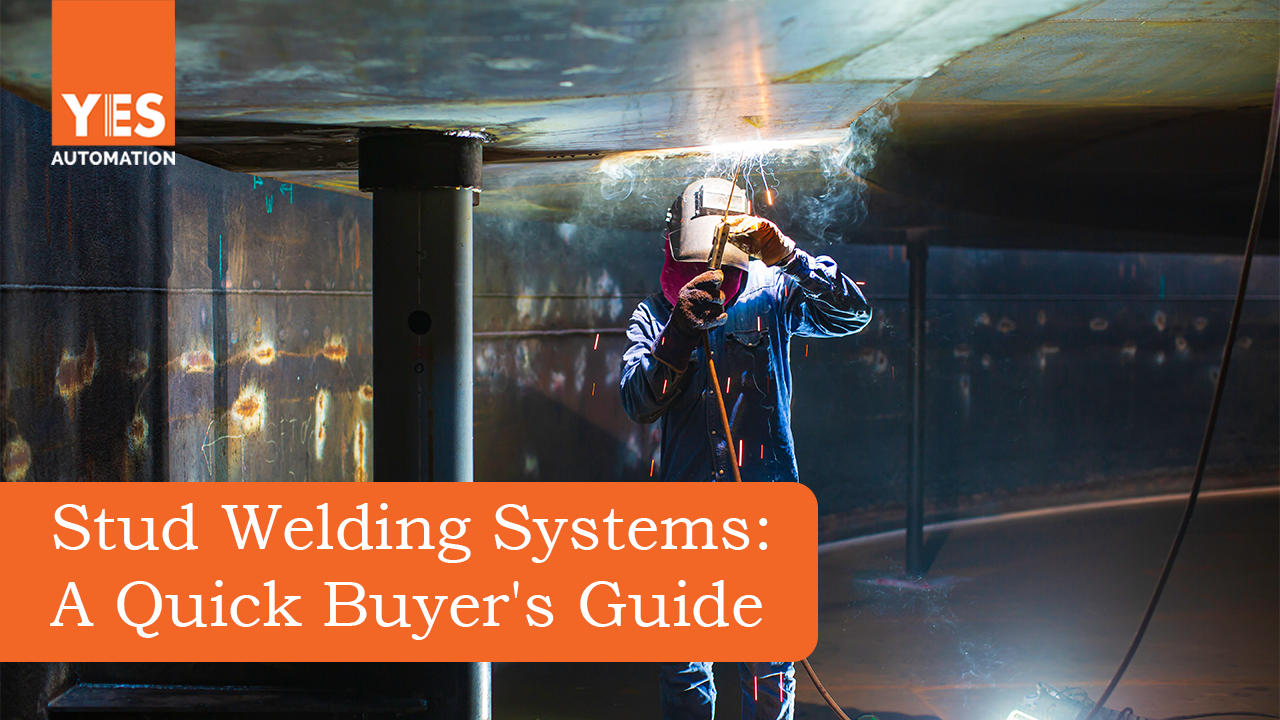
Stud Welding Systems: A Quick Buyer’s Guide
Stud welding is used for producing one sided, welded joints which are even more durable and strong compared to the parent material. This is the reason stud welding is widely used for fastening and assembly in construction, fabrication, and manufacturing industries.Even if you are an experience stud welder or just a beginner in getting into the applications of various types of stud welding, selecting the right welding system can be challenging and necessitates an extensive understanding of its suitability for your specific welding requirements. Here’s a guide that will provide you with the factors that you will need to look upon when purchasing the ideal stud welding system that meets your operational needs.
What Aspects To Consider When Purchasing a Stud Welding System
Choosing the right stud welding system can be difficult as there are many factors which need to be considered.The most important considerations when buying a stud welding system are:
1.Stud Type and Size
The stud types that are available are threaded, unthreaded and internally threaded forms.All these stud types com in stainless steel, mild steel, aluminium alloy and brass.The diameter of weld studs for mild and stainless steel threaded stud vary from M3 to M10 and for threaded aluminium alloy and brass studs range from M3 to M8. Unthreaded studs come in 3mm to 6mm diameter for all the materials.Internally threaded studs are available from M3 to M5 diameter for stainless steel, mild steel and aluminium alloy.The various stud welding systems like the drawn arc studs welding, short cycle stud welding, capacitor discharge stud welding etc,are devised for various stud types and sizes.Before purchasing make sure the system you are considering houses the particular studs you plan to use.
2. Power Source
It is important to know your power source before choosing the welding system if i can provide sufficient welding power.Not only the power source compatibility is an important factor, it is crucial to know some welding system would need a an inverter or transformer while some need a capacitor discharge source.Make sure the available power matches with the specifications of the stud welding system.
3. Welding Capacity and Speed
It is crucial to consider the welding capacity of the welding system in terms of studs per minute or per hour. This is an important factor in case you require high-volume production.In order to meet the production schedule requirements you need to know the the weld times. Therefore, it is an essential factor that will guide your selection.
4. Arc Generation
Every stud welding system, drawn arc, short welding or capacitor discharge all use a different type of arc. It is necessary to understand how the welding arc is generated and if the energy source is able to provide the necessary current.
5. Portability of the System
For unreachable areas, you will require a smaller more easily portable system. Some of the welding systems are relatively compact and easily transportable, which makes them ideal for inaccessible areas. Therefore, depending on your requirements, consider the size system's portability.
6. Welding Quality and Consistency
While purchasing a stud welding system the consistency and the quality of the weld are important.Systems with features that ensure reliable and consistent weld will minimise the defects and the need for rework.
7. User Friendly
An easy-to-use interface with inbuilt controls aids in easy operation and remarkable effect on productivity. It is better to go for systems with clear and easy to understand settings and controls.
8. Safety
Safety is one of the crucial factors to consider when choosing the stud welding system. The system must have appropriate safety features like shielding gas flow control, overload protection, and a mechanism to avert accidental discharge.
Therefore, from welding capacity, and stud type compatibility to portability, there is an extensive checklist to consider before purchasing a stud welding system that is suitable for your specific welding needs.
Choosing A Stud Welding Supplier
Choosing the right supplier of a stud welding machine is crucial to ensure you are collaborating with a reliable and efficient supplier. Below are some tips to ensure you have a stress-free purchase:
1. Service and Technical Support
Look at the warranty, getting spare parts and availability of technical support. A reliable supplier with exceptional customer service is crucial incase of any issues. The supplier should provide timely maintenance, repairs, and at hand spare parts for steady operations.
2. Experience
Consider suppliers with a good reputation in the industry.Companies that have many years of experience would provide superior products and a better comprehensive service.
3. Cost
The price of the stud welding systems can differ notably. Contemplate your budget in correspondence with features and capabilities you need. Look for the general package, quality customer service, and support. Investing in advance in a higher quality system may help in prolonged cost saving.
4. Quality of Machines
It is crucial that a supplier is offering reliable, durable and high-performance systems. Also ensure that the machines offered by the supplier comply with the applicable industrial standards and certifications.
5. Delivery
Assess delivery timelines and logistical capabilities.On-time delivery and trouble-free logistics will reduce downtime in operations.
The above considerations will help you in finding a stud welding supplier that provides reliable machines but also exceptional support and services.
Conclusion
By deliberately evaluating the above factors in accordance with your particular stud welding needs, you can choose a stud welding system